Surgical dentistry refers to dental treatments that involve operations on teeth, gums, jawbone, or other oral tissues. People who need it often have severe gum disease, missing teeth, chronic infections, or complex tooth problems. This article explains what surgical dentistry is, common procedures like dental implants and bone grafts, who needs care, what to expect, benefits and risks, and how to choose a provider.
What Is Surgical Dentistry?
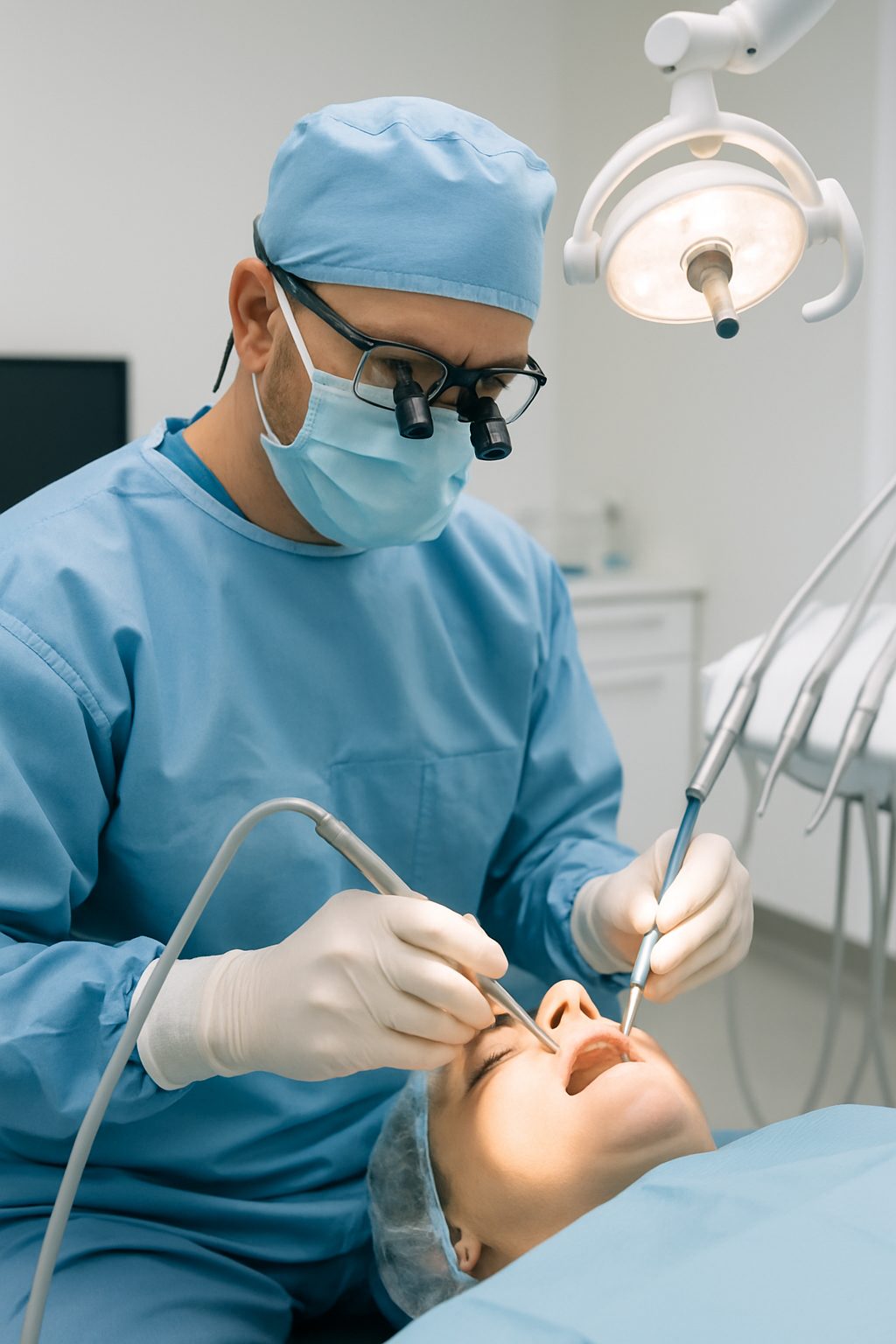
Surgical dentistry covers procedures beyond routine fillings and cleanings. It focuses on treating disease, restoring function, placing implants, and rebuilding bone or soft tissue. Unlike general dentistry, surgical dentistry often requires specialized training, advanced imaging, and techniques to manage complex problems and achieve long-term oral health.
Common Surgical Dentistry Procedures
Dental Implants
Implants replace one tooth or an entire arch. Options range from a single implant with an implant-supported crown to full-arch solutions like All-on-X. Implants restore chewing, stop bone loss, and provide a stable, long-term replacement compared with removable dentures.
Bone Grafts & Sinus Lifts
When bone has shrunk after tooth loss or infection, grafting rebuilds the jaw to support implants. Sinus lifts raise the sinus floor in the upper jaw to create room for graft material. These steps make implant placement possible and more predictable.
Periodontal Surgery
Advanced gum disease may require surgical care: pocket reduction, flap surgery, and tissue or bone regeneration. These procedures remove infected tissue, reduce bacteria, and help rebuild lost support for teeth to prevent further tooth loss.
Minimally Invasive Soft-Tissue Procedures
Techniques like the Pinhole Surgical Technique and Allen Tunnel repair gum recession without large incisions. Diode and Nd:YAG lasers and Waterlase® tools can reshape tissue, reduce bacteria, and speed healing with less discomfort and quicker recovery.
Extractions & Surgical Tooth Removal
Some teeth come out easily; others need surgical removal. Impacted wisdom teeth, broken roots, or teeth with complex anatomy often require incisions, sectioning, and precise surgical technique to remove safely.
Who Needs Surgical Dentistry?
Signs someone may need surgical care include persistent gum bleeding, deep pockets, loose or missing teeth, chronic infections, failing restorations, or significant bone loss. Patients with severe decay, impacted teeth, or those seeking implant-based tooth replacement are common candidates.
What To Expect During Treatment
Care starts with an exam and CBCT 3D imaging for precise planning. Providers create a treatment plan, use guided surgery when appropriate, and offer anesthesia options from local to IV sedation. Some treatments are done in a single visit; others are staged. Recovery varies by procedure but often includes a few days to a few weeks of healing.
Benefits & Risks of Surgical Dentistry
Benefits include restored chewing function, preserved jawbone, better oral health, and improved appearance. Risks can include infection, swelling, bleeding, or implant failure. Specialists reduce risk using sterile technique, advanced imaging, guided tools, and careful follow-up care.
Choosing the Right Surgical Dentistry Provider
Look for board certification or specialty training in periodontics or oral surgery, proven implant and regenerative experience, use of CBCT and guided surgery, and access to lasers and modern minimally invasive techniques. Experience and documented outcomes matter for complex cases.
Why Consider Idaho Perio for Surgical Dentistry
Idaho Perio offers board-certified periodontists (Dr. Jace Hansen, Dr. Kip Katseanes, Dr. Christopher Sprott) with advanced training in implants and gum surgery. The practice uses CBCT 3D imaging, LANAP®, Waterlase®, Nd:YAG and diode lasers, Pinhole Surgical Technique, All-on-X workflows, and an in-house lab to deliver faster, precise, and comfortable care.
Next Steps
Schedule a consultation and a CBCT scan to see if surgical dentistry is right for you and to review personalized treatment options.