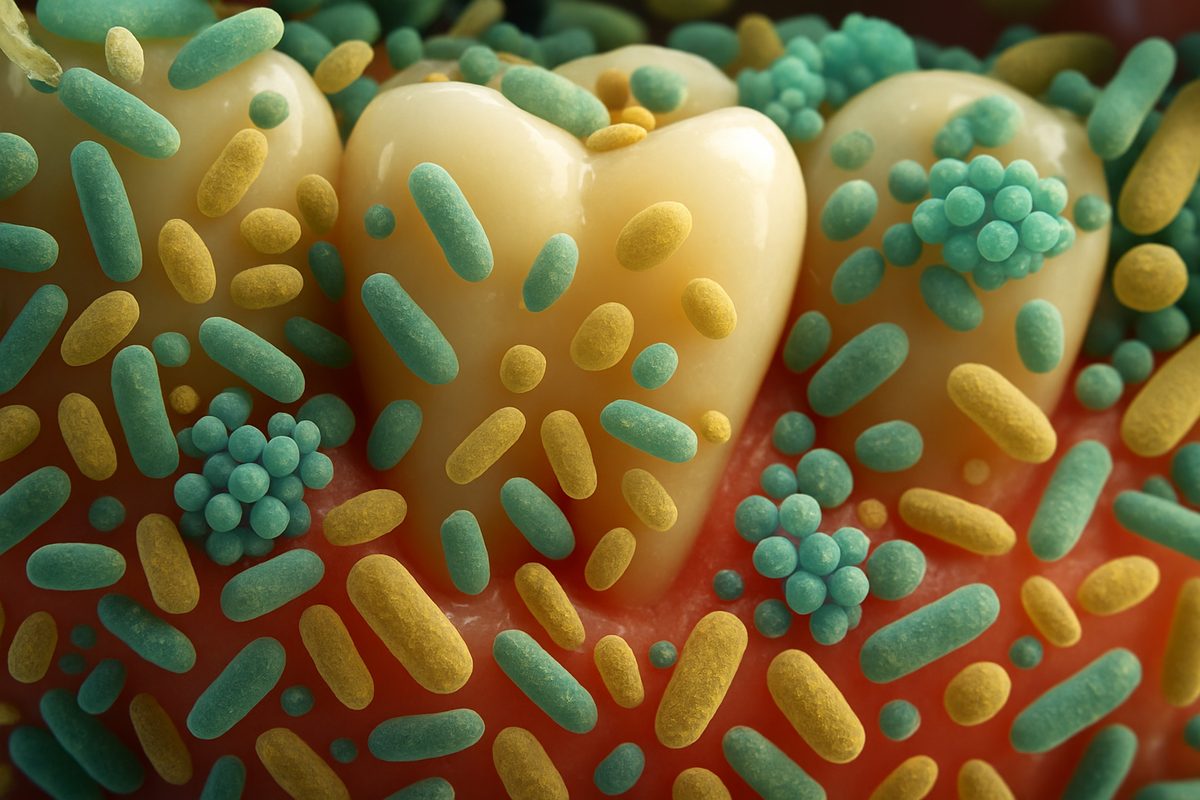
Bacteria in teeth and gums cause the most common oral health problems. These microbes live naturally in your mouth, but when they grow out of balance they can irritate gums and eat away at supporting bone. Understanding bacteria in teeth and gums helps you spot gum disease early, know what symptoms to watch for, and choose treatments that remove infection and protect your smile.
What Causes Bacteria to Build Up on Teeth and Gums?
Plaque and biofilm formation
Daily eating and saliva create a sticky film called plaque. Over time plaque becomes a thicker biofilm that traps bacteria close to the gum line. That biofilm protects bacteria from simple rinsing and lets them produce acids and toxins that inflame gum tissue.
Common risk factors
Some things make bacterial buildup worse: poor brushing and flossing, smoking, dry mouth, certain medications, older age, and systemic conditions like diabetes. These risk factors let bacteria in teeth and gums grow faster and make infections harder to control.
How Bacteria in Teeth and Gums Lead to Gum Disease
Gingivitis vs. periodontitis
Gingivitis is early gum inflammation caused by trapped bacteria. It’s often reversible with cleaning and better home care. If bacteria persist, infection can progress to periodontitis, where the body destroys the connective tissue and bone that hold teeth. That advanced stage can lead to loose or lost teeth.
Signs and symptoms to watch for
Common signs of bacterial gum infection include bleeding when you brush or floss, persistent bad breath, red or swollen gums, gum recession, loose teeth, and changes in how your teeth fit together. Early detection improves outcomes.
How Gum Disease Is Diagnosed
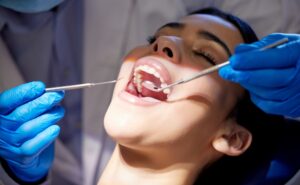
Dentists and periodontists check gum health with a periodontal probe to measure pocket depths and look for bleeding. Dental X-rays show bone loss around teeth. For complex or aggressive cases, CBCT 3D imaging or bacterial testing can map bone defects and identify specific pathogens to guide treatment.
Treatment Options to Remove Bacteria and Restore Gum Health
Non-surgical care
Initial care often includes professional scaling and root planing to remove plaque and calculus below the gum line, combined with improved home hygiene. Local or systemic antibiotics may be used short-term. Regular maintenance cleanings help keep bacteria from rebounding.
Minimally invasive laser and soft-tissue approaches
Laser therapies target bacteria and diseased tissue while preserving healthy gum. Methods like LANAP® and Nd:YAG reduce bacteria in pockets, often with less discomfort and faster healing than traditional surgery.
Surgical and regenerative care
When infection has caused significant bone or tissue loss, flap surgery, bone grafts, or gum grafts may be needed to remove diseased tissue and rebuild support. Regenerative techniques aim to restore lost bone and reattach gums to the tooth.
Preventing Recurrence: Long-Term Control of Bacteria in Teeth and Gums
Daily habits matter: brush twice a day, floss or use interdental cleaners, and consider antimicrobial mouthwashes as recommended. Lifestyle changes like quitting smoking and controlling blood sugar help reduce risk. Regular periodontal maintenance visits keep bacterial levels low and catch problems early.
Why Choose a Board-Certified Periodontist for Persistent Gum Infections
For stubborn or advanced infections, a board-certified periodontist brings specialized training and advanced tools to remove bacteria and rebuild oral tissues. Idaho Perio’s board-certified periodontists offer LANAP®, Pinhole Surgical Technique, CBCT-guided care, and in-house lab work to target infection and restore function.
When to Seek Care and Next Steps
Seek prompt care if you have heavy bleeding, severe pain, sudden tooth mobility, or signs of infection like swelling and fever. If you notice persistent bad breath or gum recession, schedule an exam. A periodontal evaluation can diagnose infection and start a treatment plan to remove bacteria in teeth and gums and protect your smile.