If you’ve searched “how do they do dental implants,” here’s a clear, step-by-step answer. Dental implants replace missing teeth with a titanium root, an abutment, and a crown or prosthetic. This guide walks you through consultation, any prep work, the placement surgery, healing, and final restoration so you know what to expect at each stage.
What Is a Dental Implant?
A dental implant is a titanium post (implant body) placed in the jaw to act like a tooth root. An abutment connects the implant to a crown or prosthetic. Implants are recommended when you want a long-term, stable tooth replacement versus bridges or removable dentures.
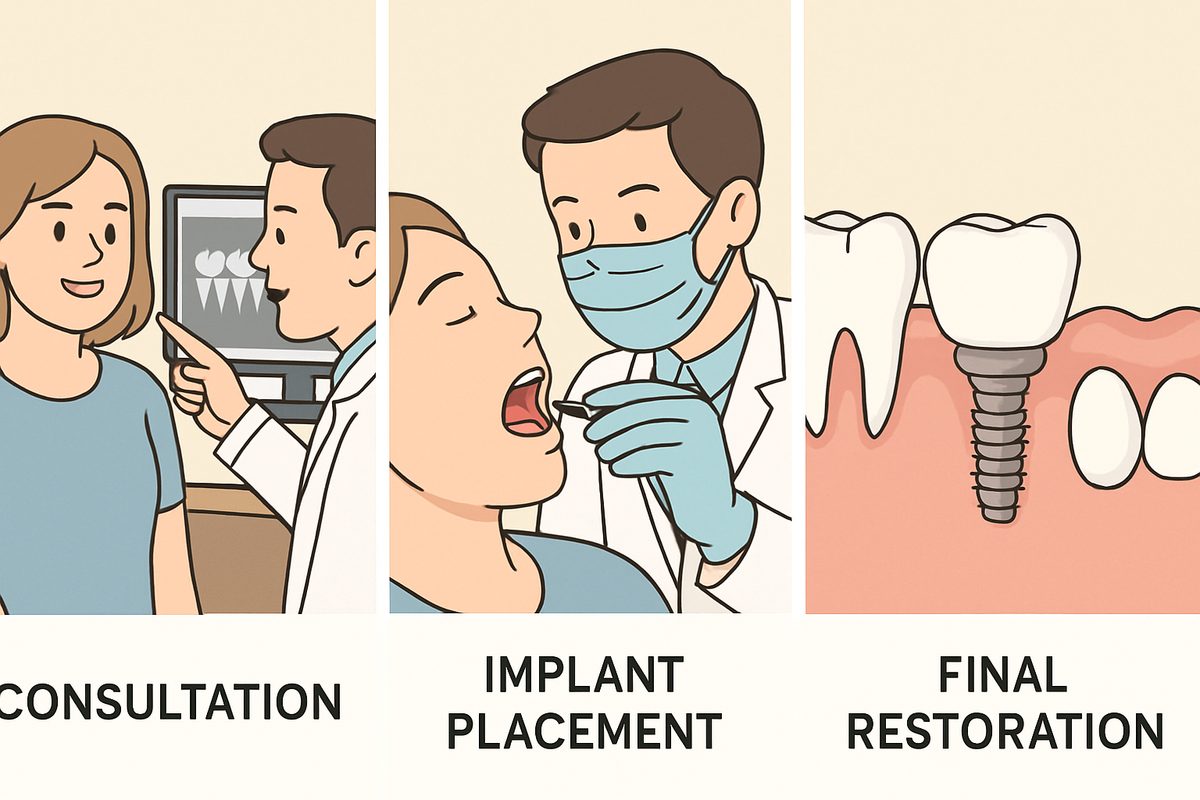
Step 1 — Consultation & Planning
Medical and dental history review
Your provider reviews health, medications, and smoking habits because conditions like diabetes, blood thinners, or heavy smoking affect healing and implant success.
3D imaging and treatment planning
CBCT 3D scans and digital impressions map bone, nerves, and sinuses. This information guides exact implant position and may be used for guided surgery planning.
Step 2 — Preparatory Treatments (If Needed)
Tooth extraction
If a damaged tooth remains, it’s removed first. Sometimes the implant can be placed right after extraction; other times the site must heal before implant surgery.
Bone grafting and sinus lifts
If bone is thin, grafts or a sinus lift add volume. Grafting can add months to treatment because new bone must integrate before implants are placed.
Step 3 — Implant Placement Surgery
You’ll get local anesthesia or sedation. The surgeon exposes bone, drills a precise hole, and inserts the implant. The site is sutured or closed with minimally invasive techniques. Implants can be placed immediately after extraction or after a healing delay; single or multiple implants follow similar steps.
Step 4 — Healing & Osseointegration
Osseointegration is when bone bonds to the titanium implant. This takes weeks to months. Expect some swelling and mild discomfort; follow-up visits check healing. Diet may be soft foods for several weeks.
Step 5 — Abutment & Temporary Restoration
Once integrated, an abutment is attached. A temporary crown or provisional prosthesis may be used to shape gums and restore function while the final restoration is made.
Step 6 — Final Prosthetic: Crown, Bridge, or Full-Arch
Final digital scans or impressions capture your bite. Options include single crowns, implant-supported bridges, or full-arch All-on-X prosthetics. The lab fabricates restorations, which are attached and adjusted for fit and appearance.
Special Cases & Technologies That Improve Outcomes
Full-arch solutions and immediate-load options can shorten timelines in the right candidates. Guided surgery, lasers, and in-house labs improve accuracy, reduce recovery, and speed turnaround.
Risks, Recovery, and Aftercare
Common risks: infection, implant failure, nerve or sinus issues. Watch for persistent pain, swelling, or loose implants and contact your provider. Good oral hygiene, quitting smoking, and regular dental visits protect implants long-term.
How Much Time and Cost Should You Expect?
Timeline ranges from a few months to over a year if grafting is needed. Cost depends on number of implants, grafts, and prosthetic type (single crown vs full-arch).
How To Choose Who Should Place Your Implants
Ask about training, board certification, implant volume, 3D imaging, and complication handling. Specialists with focused residencies or board certification typically manage complex cases better.
About Idaho Perio
Idaho Perio’s board-certified periodontists use CBCT imaging, lasers, minimally invasive methods, and an in-house lab to deliver predictable implant care. Their team handles simple to complex cases, including full-arch restorations.
Quick FAQ
Q: How do they do dental implants? A: Consultation, any extractions or grafts, implant surgery, healing, abutment and temporary, then final prosthetic. Q: Do implants hurt? A: Discomfort is usually controlled with meds and fades in days to weeks. Q: How long do implants last? A: With care, decades or a lifetime. Q: Maintenance? A: Good home care and regular checkups. If you’re ready to learn more or schedule a consult, contact Idaho Perio to discuss personalized implant options.