
Intro
Knowing how to treat gum disease can save your teeth and protect your overall health. This post covers home care steps, common professional treatments, when to see a specialist, and practical prevention tips. Acting early makes treatment simpler and more effective, so learn the signs and options so you can get help quickly.
What is gum disease and why it matters
Gum disease starts as gingivitis, where gums are inflamed and bleed easily. If untreated, it can progress to periodontitis, a serious infection that destroys the bone and fibers that hold teeth in place. Beyond tooth loss, advanced gum disease links to heart disease, diabetes complications, and other health problems, so treating it matters for your whole-body health.
Common signs and stages of gum disease
Early signs
Early symptoms include gums that bleed when you brush or floss, redness, swelling, bad breath that won’t go away, and tender gums. These are often reversible with better home care and a professional cleaning.
Advanced signs
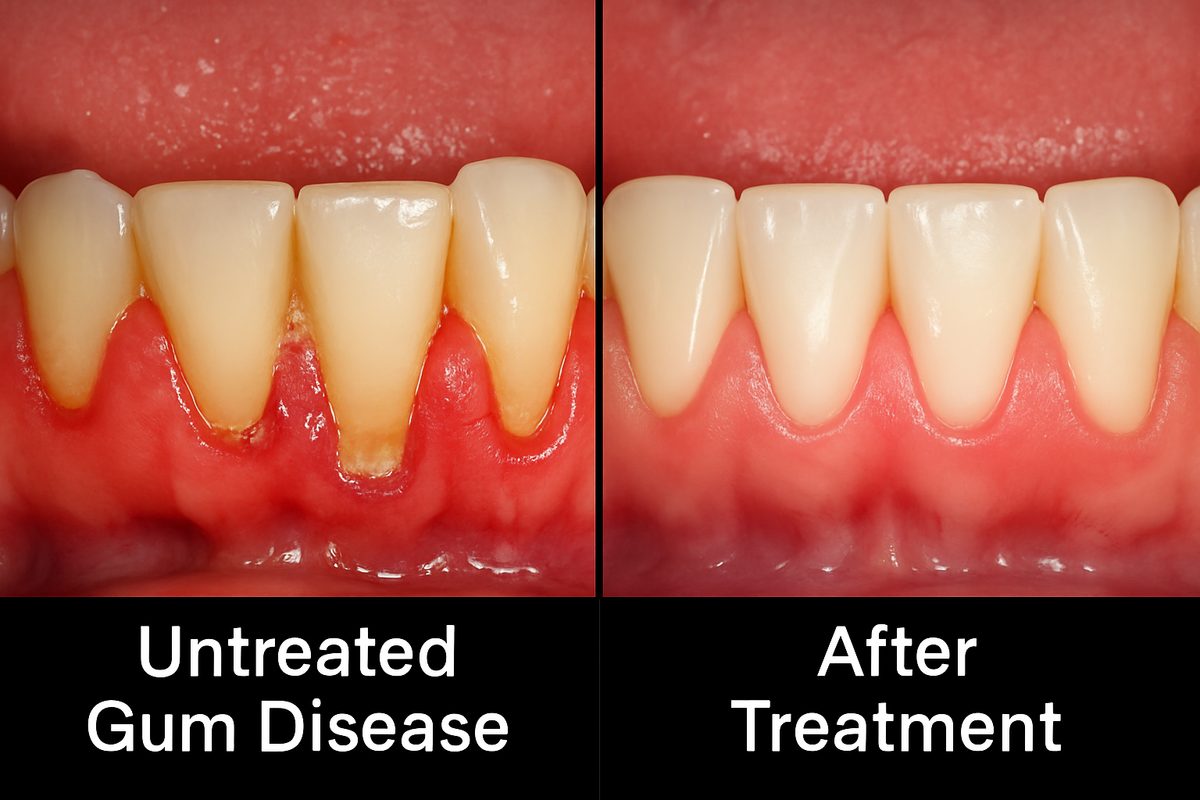
Advanced disease shows receding gums, pockets forming between teeth and gums, loose or shifting teeth, pain, pus, and bone loss visible on X-rays. If you notice these signs, prompt professional care is essential to prevent tooth loss.
How to treat gum disease at home
Start with consistent daily oral hygiene: brush twice a day with a soft-bristle brush using gentle circular strokes, and clean between teeth once daily with floss or a water flosser. Use an anti-plaque mouthwash if recommended. Lifestyle changes help too: stop smoking, control blood sugar if you have diabetes, eat a nutrient-rich diet, and cut down on sugar. These steps reduce inflammation and support healing alongside professional care.
Professional, non-surgical treatments
Scaling and root planing
Scaling and root planing is a deep cleaning that removes plaque and tartar below the gumline and smooths tooth roots so gums can reattach. It’s often the first step for moderate disease.
Antibiotics and local antimicrobials
Topical or short-term oral antibiotics may be used to lower bacteria and support healing. These are used with cleaning, not as a stand-alone treatment.
Laser-assisted therapies
Laser options like LANAP®, Nd:YAG, Waterlase®, and diode lasers can remove diseased tissue, reduce bacteria, and encourage regeneration. Lasers may mean less discomfort and faster recovery for some patients.
Surgical and regenerative options for advanced disease
Surgery is considered when pockets are deep or bone loss is severe. Options include pocket reduction, flap surgery, bone and tissue grafting, and guided tissue regeneration. Minimally invasive techniques like the Pinhole Surgical Technique® or Allen Tunnel Technique can treat recession with less recovery time. When teeth are lost, full-arch implant solutions can restore function and appearance.
When to see a periodontist and what to expect
See a periodontist for persistent deep pockets, rapid bone loss, failing prior treatments, or complex implant needs. A specialist visit includes a full exam, periodontal charting, and often CBCT 3D imaging to map bone and plan treatment. Expect a personalized plan that may combine non-surgical, laser, or surgical care.
Why choose a board-certified periodontist for complex cases
For complex disease, board-certified periodontists bring extra training and advanced technology. Idaho Perio’s team uses CBCT imaging, lasers, minimally invasive techniques, and an in-house lab to deliver predictable, evidence-based care when standard treatments aren’t enough.
Closing — Next steps
If you notice signs of gum disease, schedule an evaluation soon. Bring a list of symptoms, any medical conditions, and current medications. Early action can save teeth and improve overall health—don’t wait to get checked.